01 What renovations leave in the wall
- Access holes
- Square cut-outs near outlets, switches and ceiling boxes where wire was fished through. Usually tidy, often several lined up along a single wall.
- Plumbing openings
- Larger rectangles behind a vanity or below a shower valve, sometimes left open on purpose until the work is tested.
- Abandoned boxes and fixtures
- An old sconce or wall phone box that is no longer needed. The box is removed or blanked by an electrician first; then the opening is patched.
- Anchors and mounts
- Shelf brackets, curtain rods and a TV mount that moved twice, apparently. Toggle bolts leave holes bigger than they look.
- Removed cabinets or soffits
- Torn paper, strips of glue and screw holes where cabinets were, and an unfinished band of ceiling where a soffit came down.
- Plain old impact
- The doorknob hole, the moving-day corner gouge, the furniture dolly that misjudged the hallway.
02 Three ways a hole gets closed
Up to a few inches
Filled with setting compound over a small backer, or covered with a paper patch, then two or three thin coats. Torn face paper around the hole is sealed with primer first, or it bubbles under the new mud.
Fist to dinner plate
The hole is squared up, wood or board backing goes in behind the edges, and a new piece of board of matching thickness is screwed in, taped and given three coats.
Bigger than that
The cut is widened to reach the studs or joists on each side so the new board is fastened to framing, not floating. Long runs are taped like new construction.
Which one applies is decided by the size of the opening and what is behind it, not by how bad it looks. A ragged hole is often easier to close than a neat one cut half an inch from a stud.
03 Patching, asked plainly
Is a single little hole too small to bother with?
Yes. Small jobs are normal. It is often sensible to gather every hole in the house into one visit, since a lot of the time is setup and drying, not the size of the hole.
After paint, can anyone spot the patch?
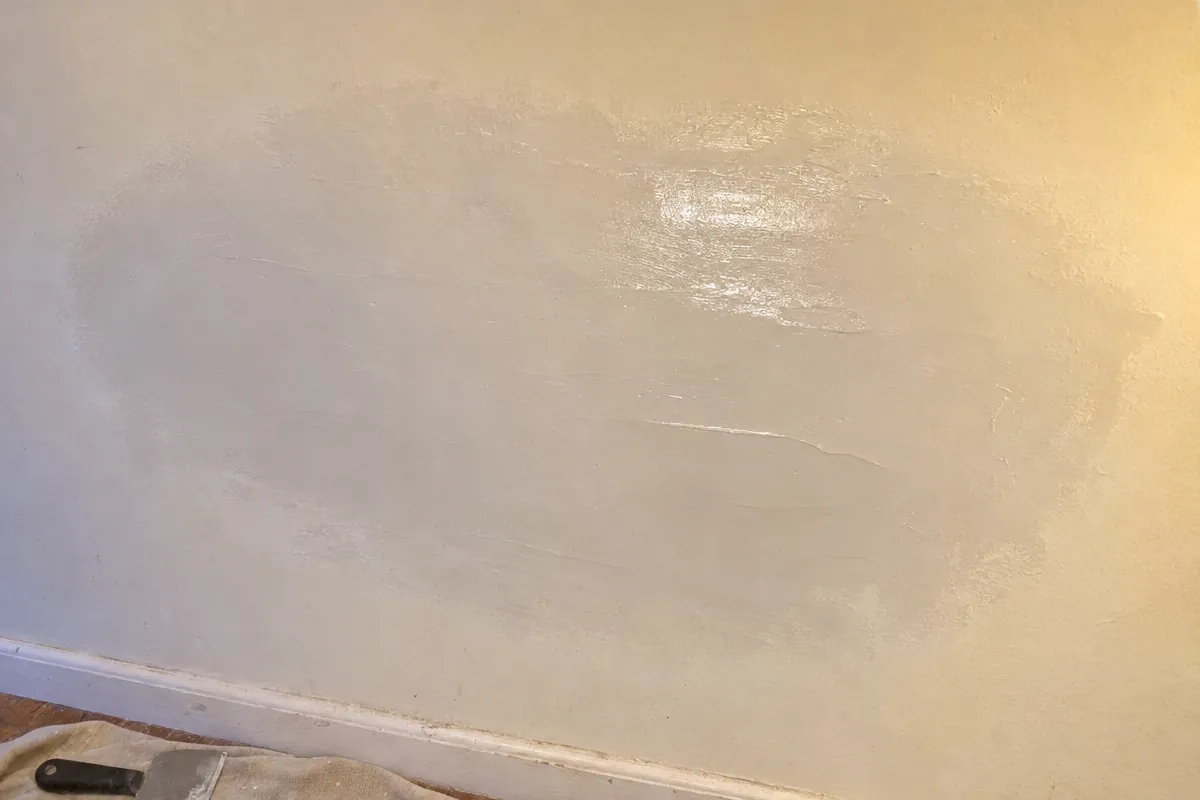
A patch spread wide, sanded level and primed before paint is very hard to pick out. What gives patches away is skipping primer, which makes the paint dry flatter over the compound than over the wall, or a sheen that does not match. Painting the whole wall corner to corner evens it out best.
Can a patched spot hold a TV mount again?
A drywall patch is not structural. A mount should be fastened into studs, wherever the patch is.
How messy is it?
Cutting and sanding make fine dust. Expect floors covered, vents closed off near the work and sanding kept to a minimum; vacuum sanders help a lot.
04 Timing it with the rest of the project
Patching goes last among the trades, for a plain reason: anything closed while wiring or pipes are still in progress may have to be opened again. If work needs an inspection before walls are closed, wait for it. A good order is trades out, inspection done if one was needed, patching, then paint.
Seaford's housing gives this work plenty of variety. The hamlet's growth after Sunrise Highway came through in 1929 means many walls have been rewired and replumbed more than once, and in Seaford Harbor the Herald counted homes raised, completely remodeled or rebuilt after Irene and Sandy. Older walls may also be thicker board or plaster over lath, which changes how a patch is built up so it ends flush.